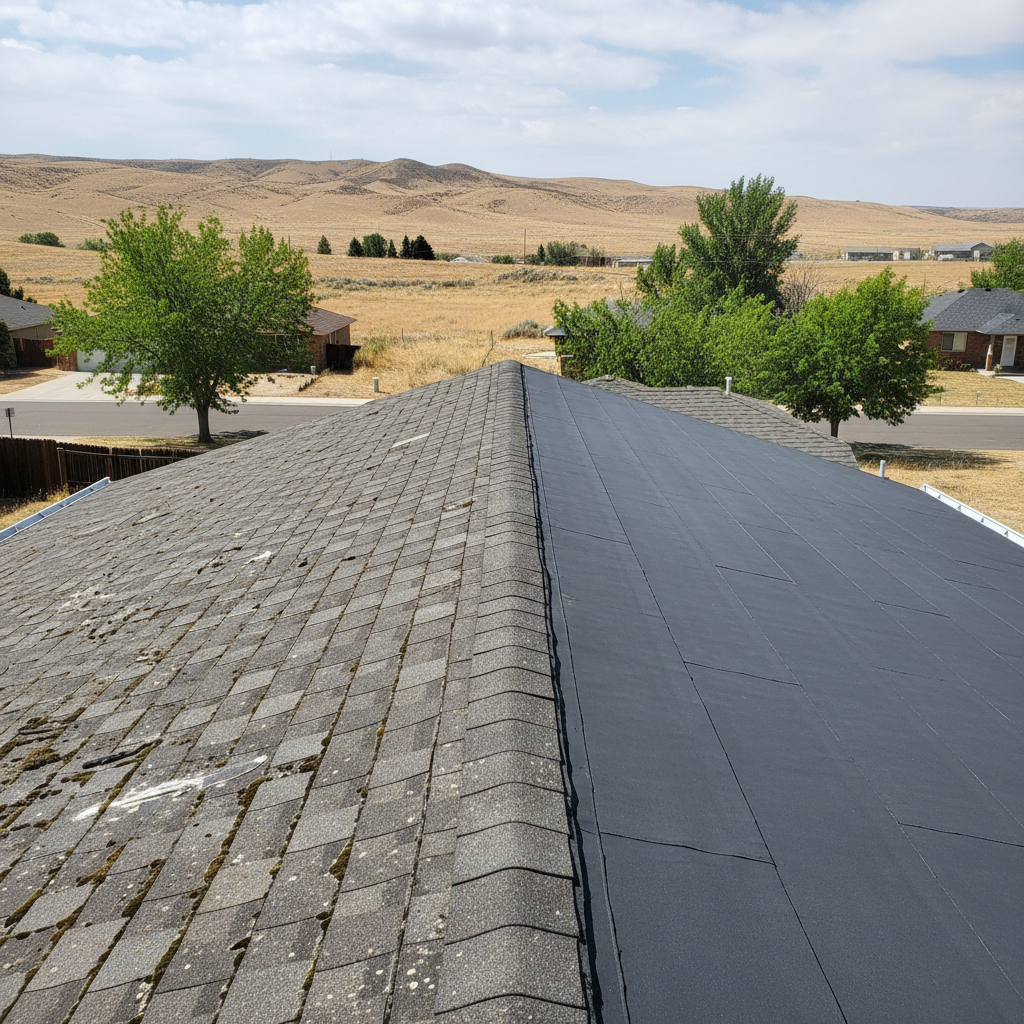
Alright, let's talk flat roofs. If you've got a section of your home that's flat – maybe a garage, an addition, or even a whole modern design – you've probably heard about TPO and EPDM. These are the two big players in residential flat roofing around here, and homeowners often ask me, "Which one's better?" The truth is, there's no single 'best' option; it really depends on what you're looking for. But I can tell you what I've seen work and what doesn't, especially with our Richland sun and occasional crazy winds.
What's TPO?
TPO stands for Thermoplastic Polyolefin. It's a single-ply membrane, usually white, gray, or tan, that's become super popular in the last couple of decades. When we install it, we typically use a hot-air welder to fuse the seams together. This creates a really strong, monolithic surface – basically, one big sheet with no weak points where water can sneak in. Think of it like plastic welding; it's a very clean, tight seal.
What's EPDM?
EPDM is Ethylene Propylene Diene Monomer. Most folks just call it 'rubber roofing' because that's exactly what it feels like. It's a synthetic rubber membrane, almost always black, and it's been around for a long time. It's a proven material. For installation, we typically use adhesives to glue the seams together. It's a different approach than TPO's heat welding, but it's effective when done right.
Cost: What's Your Wallet Saying?
Generally speaking, EPDM tends to be a bit less expensive upfront than TPO. The material itself can be cheaper, and sometimes the installation labor is a little less intensive, especially for smaller, simpler roofs. But that's not always the case, and prices fluctuate. TPO's material cost can be higher, but its long-term benefits often balance that out. Don't just look at the sticker price; think about the whole picture.
Durability & Our Richland Weather
This is where things get interesting for us in the Tri-Cities. TPO is incredibly durable. It's resistant to tears, punctures, and impacts, which is great if you ever need to get up on your roof for maintenance or if a branch falls. But the real kicker for Richland is its UV resistance. That white TPO reflects a lot of our intense summer sun, which can help keep your attic cooler and potentially lower your AC bills. It also holds up really well against temperature fluctuations – from our hot summers to our cold, dry winters, TPO doesn't get brittle easily.
EPDM is also very durable, especially against hail and punctures. It's flexible, so it handles building movement well. However, being black, it absorbs a lot of heat. That's not ideal for energy efficiency in July and August. Over time, some EPDM membranes can also be more susceptible to UV degradation, though modern formulations are much better than they used to be. I've seen EPDM roofs in older South Richland neighborhoods that are still holding up after decades, but they've usually been well-maintained.
Maintenance: Keepin' It Clean
Both TPO and EPDM are relatively low maintenance, which is a big plus for busy homeowners. For TPO, the smooth, light-colored surface means it doesn't show dirt as much, but it can get dusty. A good rinse with a hose usually does the trick. You'll want to check the seams periodically, especially after a big windstorm, just to make sure everything's still tight.
EPDM, being black, can show dirt and debris more readily. It can also collect more moss or algae in shaded areas, though that's less common with our dry climate. Again, a simple wash is usually all it needs. The main thing with EPDM is to keep an eye on those adhesive seams; sometimes they can lift over many years, and you'll want to address that quickly to prevent leaks.
Appearance: What Do You Want to See?
Let's be honest, flat roofs aren't exactly the curb appeal star of your home. But they still contribute to the overall look. TPO's clean, light surface offers a more modern, sleek aesthetic. It's a popular choice for contemporary homes or commercial buildings where a clean look is desired. The lighter colors can also make the roof area feel less imposing.
EPDM's black, matte finish is more traditional for flat roofs. It's unobtrusive and blends in well, especially if your roof isn't highly visible. It's a classic look that simply works.
My Take for Richland Homeowners
If you're asking me, for most residential flat roof applications here in Richland, I lean towards TPO. The energy efficiency benefits from its reflective surface are a big deal with our hot summers. You'll feel it in your cooling bills. The heat-welded seams are incredibly robust and offer superior protection against water intrusion, which is crucial for any roof. Plus, its resistance to UV rays means it's going to stand up better to our intense sun over the long haul. It's an investment that often pays off in lower energy costs and fewer headaches down the road.
That's not to say EPDM is bad – it's a solid, reliable material, and if your budget is tight or you prefer the traditional rubber look, it's a perfectly good option. Richland Roofing Company installs both, and we make sure either one is put on right, so it'll last you for years. But if you're looking for maximum energy efficiency and cutting-edge durability against our specific weather patterns, TPO usually wins out in my book.